Meadow View Farm
Parksville, Vancouver Island
what's ripe on the farm this week
The Year on the Farm
where we stand in the season
The island is waking up.
Something is always moving on Vancouver Island — the light, the tide, the season turning over.
Meet the Residents
Daisy runs the place. The rabbits, eagles, and visiting sheep are just guests.
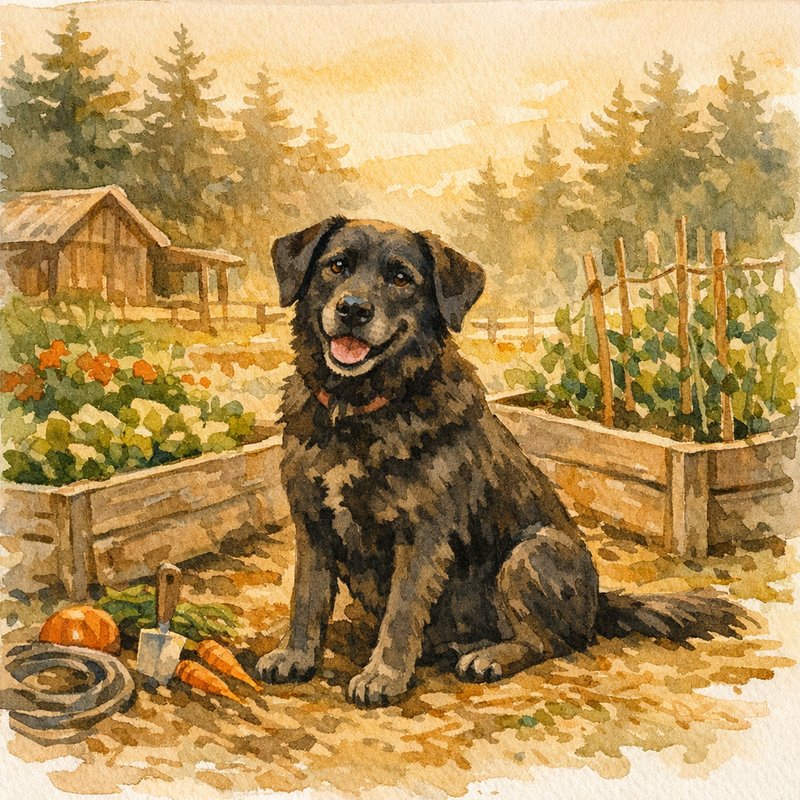
Daisy
The Farm Dog
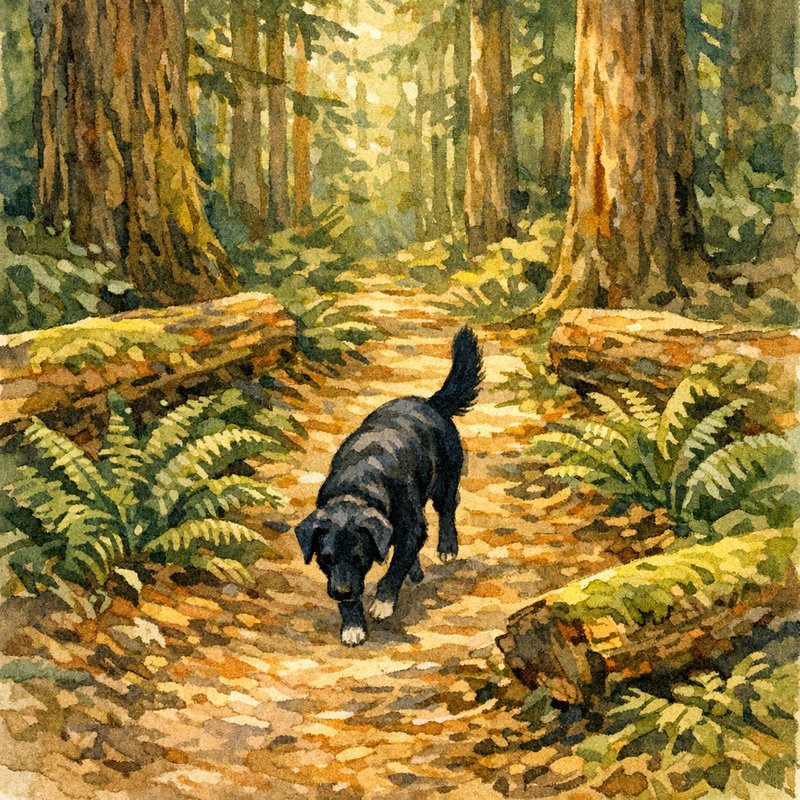
Black as a moonless night and twice as warm. Daisy is the heart of the farm — first one out the door in the morning, last one to come in at night. She patrols the garden beds, keeps an eye on the orchard, and watches the rabbits from the porch with a patience that borders on philosophy.
Follow her adventures: @daisyfarmdog
Standing watch.
Wildlife Visitors
The Rabbits
Eastern cottontails
There are at least four of them, maybe more — it's hard to tell when they freeze between the raised beds. They appear at dawn and dusk, nibbling clover in the field while Daisy watches from the porch with studied indifference. One bold youngster likes to sit right on the garden path like it owns the place.
Most active at dawn and dusk, year-round
The Eagles
Bald eagles · Haliaeetus leucocephalus
A nesting pair lives in the big Douglas fir at the edge of the property. Some mornings one of them perches at the very top, perfectly still against the sky, while the other circles the field below. Daisy sits and watches with the kind of respect she doesn't give the rabbits.
Year-round residents of the Parksville shoreline
The Heron
Great blue heron · Ardea herodias
It stands perfectly still at the edge of the garden for an hour at a time, like a statue someone placed there and forgot about. Then it takes off in slow motion — enormous wings, prehistoric silhouette — and you remember you're sharing the land with something ancient and unbothered.
Frequent visitor, especially in the quiet morning hours
The Hummingbirds
Anna's hummingbird · Calypte anna
Tiny, furious, and territorial. They buzz the feeder by the kitchen window with the confidence of something ten times their size. The male's throat catches the light sometimes — a flash of hot pink in the green — and then he's gone before you can point him out.
Year-round on Vancouver Island — one of the few hummingbirds that overwinter here
The Sheep Next Door
The neighbour's flock
Technically they belong to the farm next door, but they graze the big field that borders our property like it's a shared arrangement nobody discussed. A dozen or so, mostly white, with one black one who always stands slightly apart. Daisy considers them colleagues.
Visible from the east fence, grazing most afternoons
What's Growing — Zone 8b
In the Greenhouse & Garden
What's Ready to Pick
From the Farm Kitchen
What the season grows, the kitchen turns into something good.
Miso Broth with Kale and Leeks
The kale is at its sweetest after a winter in the ground. Ten minutes and a warm bowl.
- 4 cups vegetable stock
- 3 tbsp white miso paste
- 2 large kale leaves, torn
- 1 leek, sliced thin
- 2 garlic cloves, minced
- 1 tsp sesame oil
- Soy sauce to taste
- Soft-boiled egg (optional)
- Warm a splash of oil over medium heat. Add the leek and garlic and soften for 5 minutes until sweet and translucent.
- Add the torn kale and pour over the hot stock. Bring to a gentle simmer and cook 5 minutes.
- Ladle out a cup of the hot broth, whisk in the miso off the heat, then stir it back into the pot. Add sesame oil. Miso goes in last — boiling kills it.
Taste for salt — miso varies. A barely-set egg on top if you have one. The garlic shoots coming up in the garden right now are beautiful here if you get to them before they harden.
Garden Tomato Toast
August tomatoes off the vine barely need a recipe. This is more of a suggestion.
- 2 thick slices good bread
- 2–3 ripe heirloom tomatoes
- 1 garlic clove, halved
- Handful fresh basil
- Good olive oil
- Flaky salt & black pepper
- Toast the bread until golden. While still warm, rub the cut face of a garlic clove over the surface — it melts right in.
- Slice the tomatoes thick — at least half an inch. Layer them generously on the toast.
- Tear the basil and scatter it over. Drizzle with oil, add a good pinch of flaky salt and a crack of pepper. Eat immediately.
There are about three weeks a year when tomatoes taste exactly like this. Make this every day of them. Different varieties on the same slice if you have them — the contrast is worth it.
Harvest Squash and Apple Soup
Butternut from the garden, an apple from the orchard — the soup practically makes itself.
- 1 medium butternut squash
- 2 apples, roughly chopped
- 1 onion, diced
- 3 garlic cloves
- 4 fresh sage leaves
- 4 cups chicken or veg stock
- Butter, salt and pepper
- Halve the squash and roast cut-side down at 200°C (400°F) until completely tender, about 40 minutes.
- Soften the onion and garlic in butter over low heat until sweet. Add sage and cook 1 minute more.
- Scoop in the roasted squash, add apples and stock. Simmer 15 minutes until apples are soft.
- Blend until smooth. Taste — a squeeze of lemon brightens it, a spoon of cream rounds it out.
The apples from the orchard work beautifully here — they're tart enough to cut the sweetness of the squash. Any apple will do, but a slightly sharp variety is best.
Root Vegetable Hash with Eggs
Everything in the cellar gets a turn in the cast iron. The best meal of the quiet season.
- 3 medium potatoes, cubed
- 2 carrots, cubed
- 1 beet, cubed
- 1 onion, diced
- Fresh thyme and rosemary
- 2–4 eggs
- Butter, salt and pepper
- Cube the potatoes, carrots, and beet. Parboil in salted water until just tender, about 8 minutes. Drain well and pat dry.
- Melt butter in a cast iron pan. Soften the onion, then add all the vegetables. Press flat and cook undisturbed until a golden crust forms — about 8 minutes.
- Stir in the herbs, press flat again, and cook a few more minutes until crispy throughout.
- Make small wells and crack in the eggs. Cover the pan until whites are set but yolks still run.
The beet turns everything a gentle pink — don't be alarmed. Daisy waits patiently at the kitchen door for the peelings. They're her favourite.
Spotted Today
from the field notes
Migration Watch
who’s here this month
From the Journal
notes from the farm
Ask the Farmer
questions people actually ask
-
Honestly, both. We have a quarter-acre in Parksville — six raised beds, a small greenhouse, three orchard trees (two Gravensteins, a Bartlett pear, an Italian prune), and a lot of ambition. We grow garlic and kale and more tomatoes than two people can reasonably eat. We don’t sell anything, we don’t raise livestock. It’s a hobby farm in the truest sense — we grow because we love it, and Daisy makes sure we never take it too seriously.
-
Garlic is king. Plant Music hardneck in October, harvest in July — it practically grows itself. Kale overwinters without complaint and tastes sweeter after a frost. Tomatoes thrive if you give them a south-facing bed and start them early (March, under lights). Peas go in February and are done before the slugs know what happened. And the fruit trees — apples in Zone 8b are extraordinary. The Gravenstein ripens in August and tastes like nothing you’ll find in a grocery store.
-
Slugs. There is no gentler way to say this. The Pacific Northwest slug population is enormous, organized, and patient. Iron phosphate bait helps. Beer traps help more. Ducks help most, but we don’t have ducks. Beyond that — the shoulder seasons are trickier than people expect. April can feel like spring for two warm weeks and then dump a cold rain for ten days. You learn to keep row covers handy and never plant a tomato before the May long weekend, no matter how confident you feel.
-
Daisy provides essential morale support and quality-control supervision. She inspects every freshly dug bed by standing in it. She monitors the rabbit situation from a distance (they have come to an arrangement). She alerts us to eagles, ravens, delivery trucks, and her own reflection in the greenhouse glass. She has never, not once, successfully caught a rabbit — but she runs with tremendous conviction. She is very good at her job, whatever her job is.
-
Garlic, in October. It goes in the ground, you forget about it for seven months, and in July you pull out the most satisfying thing you’ve ever grown. Then kale — Lacinato or Red Russian, both thrive here and both overwinter. From there: peas in February, lettuce in March, whatever you love to eat in May. The key is not to start too big. One four-by-eight bed, done well, will teach you everything and produce more than you expect.
-
More than you plan, less than it feels like. The busiest period is May to August — there are weeks where you’re out there every day. But a lot of that is optional: an evening pulling weeds, a morning harvesting, a Sunday afternoon just looking at things that are growing. In the off-season, it’s very light — ordering seeds in January, pruning in February, starting seedlings in March. The honest answer is: it takes as much time as you want to give it, and then a little more.
-
We eat most of it. We preserve what we can’t eat fast enough — garlic hangs to cure in the greenhouse, tomatoes become sauce and passata, kale goes into the freezer. What we can’t eat or preserve we leave on the back fence with a note. It goes quickly. There’s something deeply satisfying about a winter dinner where every vegetable on the plate was grown within twenty feet of the kitchen door.
-
We go as customers, not vendors. The Parksville Farmers Market runs Saturday mornings on the Parksville Community Park, and the Qualicum Beach market runs Saturdays too. Both are excellent — good local producers, honest prices, and the kind of conversations you can only have when someone grew the thing you’re holding. We go for bedding plants in spring, asparagus in April, garlic scapes in June, and local honey year-round. Daisy sometimes comes. She is very popular.
The Garden
what’s growing this month
tap any bed · Meadow View Farm · Parksville, BC
In the Orchard
six trees · season by season
Growing Together
companion planting in the zone 8b garden
Good Friends
Keep Apart
The Pollinators
what’s in bloom, and who’s visiting
Wild & Gathered
what the hedgerows and forest are offering this month
The Larder
putting up the harvest — and what's on the shelf
What to Preserve
On the Shelf
The Market Basket
what to look for at Vancouver Island farmers markets this month
The Neighbourhood
good farms are never far on Vancouver Island
A hobby farm doesn't grow in isolation. The food community around Parksville and Qualicum Beach is one of the best reasons to be rooted here.
From the Farm
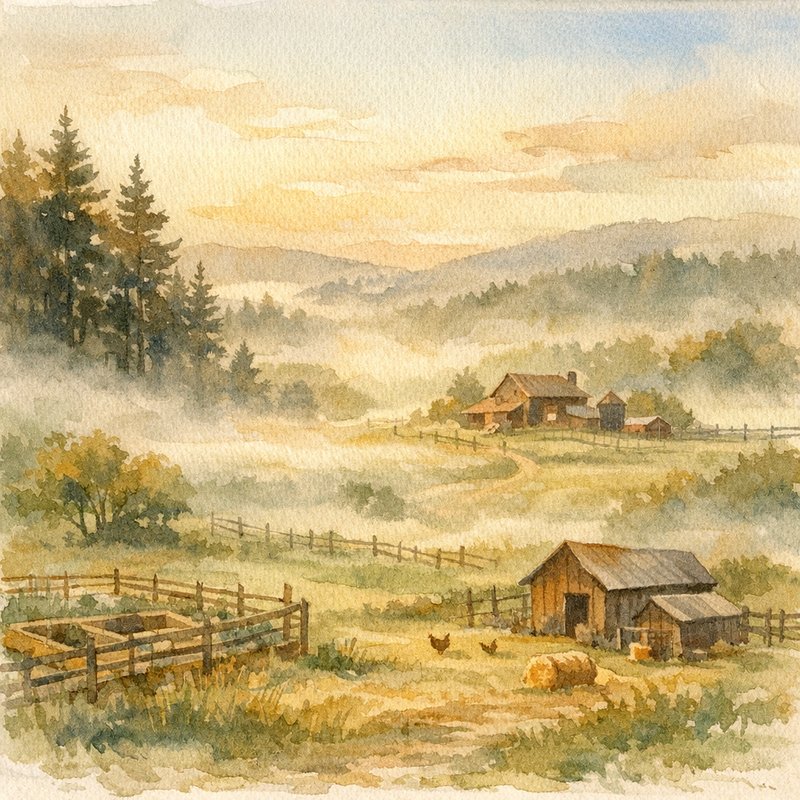
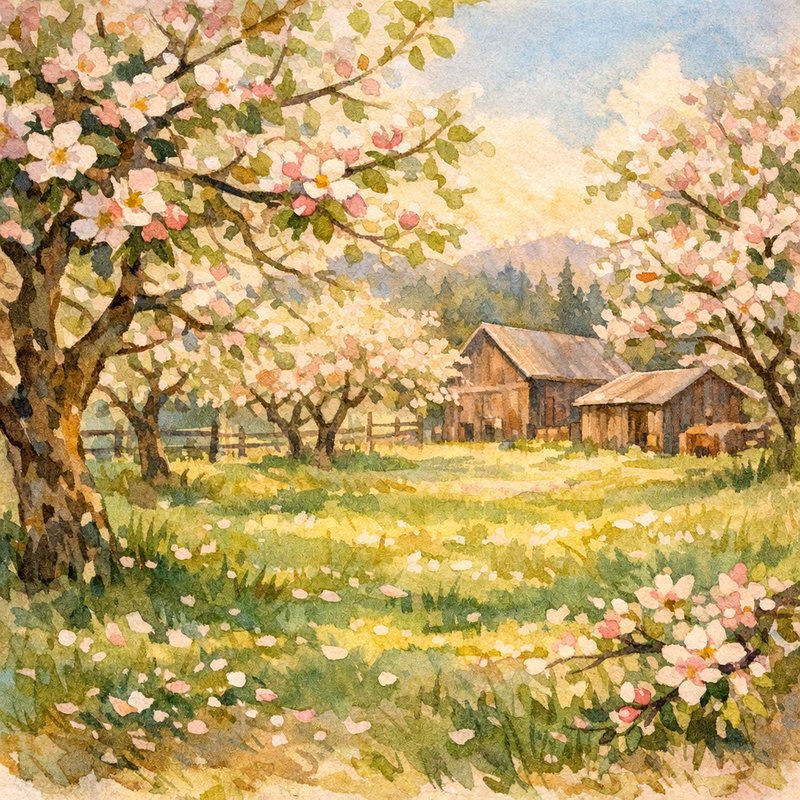
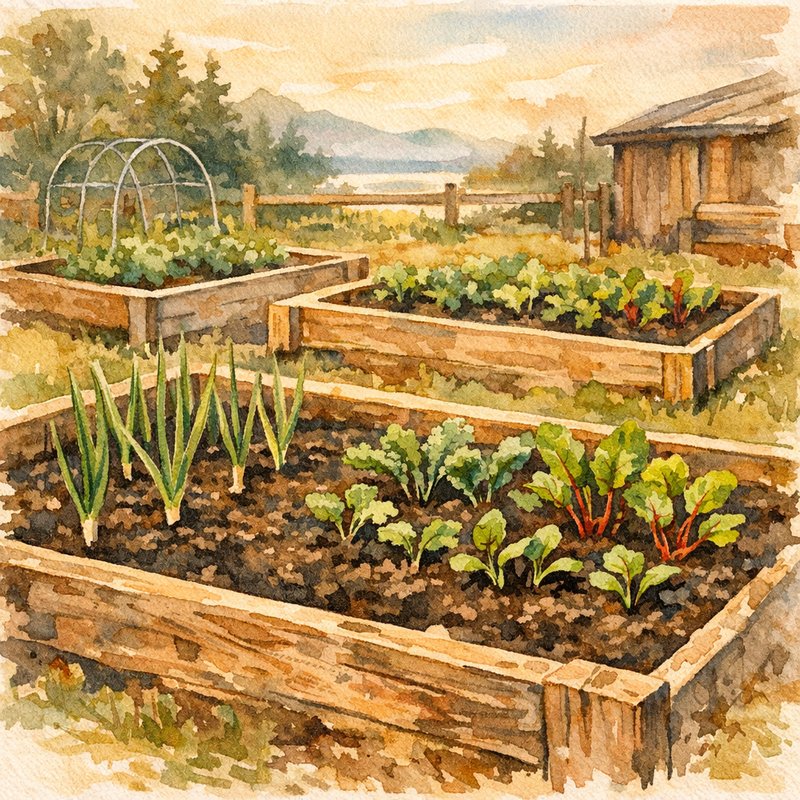
a walk around Meadow View
Walk the Trails
the farm from above
Walk slowly. There is always something to notice.
Tap any spot to explore the farm